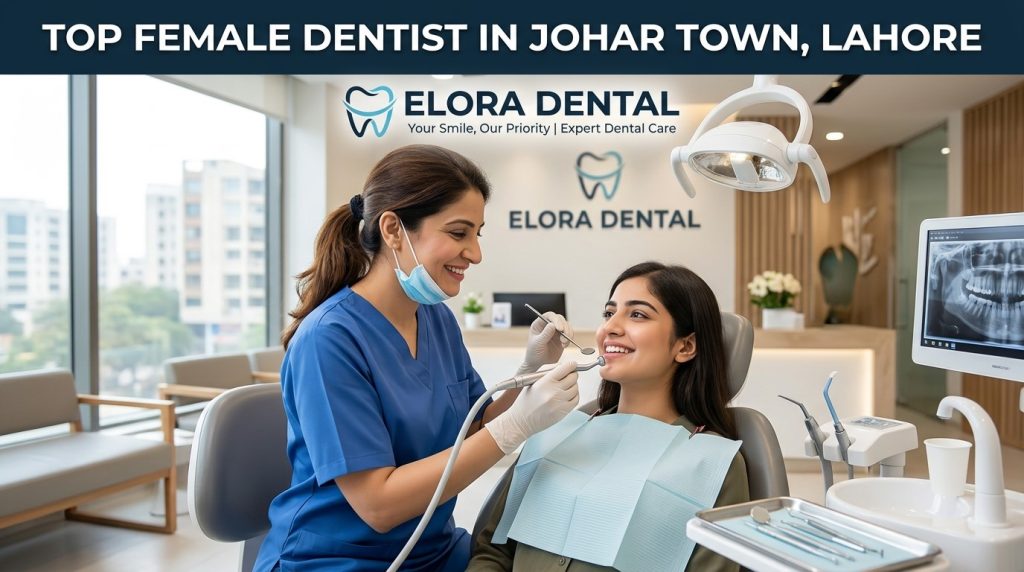
If you have typed “female dentist Johar Town Lahore” into a search bar, you are probably not just looking for a clinic address. You are looking for something more specific: a dentist you feel comfortable talking to, who understands your hesitation about dental visits, who explains things patiently rather than rushing you through a checkup, and who respects your personal and cultural preferences during treatment. For many women, girls, and even parents bringing in young daughters, the dentist’s gender genuinely affects how relaxed and honest they can be during a visit. That is not a small or unusual concern; it is one of the most common reasons patients search for a Female Dentist Johar Town Lahore rather than simply “the nearest dentist.”
At Elora Dental and Aesthetics in Johar Town, this exact concern shapes how care is delivered. This guide walks through why choosing a female dentist matters to so many patients, what to actually expect during a visit, how to identify a dental practice that takes hygiene and safety seriously, and how to make a confident, informed decision the next time a toothache, a chipped tooth, or a routine cleaning brings you to search for care.
Why Patients Specifically Look for a Female Dentist
There is no single reason women and families search for a female dentist it is usually a combination of comfort, culture, and experience.
1. Physical and Emotional Comfort During Treatment
Dental procedures are intimate by nature. The dentist works within inches of your face, sometimes touches your jaw or neck to check for swelling or lymph node changes, and asks you to keep your mouth open for extended periods. For many patients, this closeness feels far more comfortable with a female provider, particularly for procedures like root canals, extractions, or cosmetic treatments that require longer chair time.
This is especially true for patients who have had an uncomfortable or dismissive experience in the past. Feeling unheard during a painful procedure creates lasting dental anxiety, and switching to a provider patients feel instinctively safer with can undo years of avoidance.
2. Cultural and Religious Preferences
In Lahore, and across much of Pakistan, many women prefer female healthcare providers for personal, cultural, or religious reasons, particularly for anything involving physical examination or close contact. This is a completely valid preference, not a niche one, and a good dental practice does not make patients feel like they need to justify it. Families raising daughters often instill this preference early, which is why parents specifically search for a “female dentist” when booking their daughter’s first appointment rather than defaulting to any nearby clinic.
3. Better Communication About Sensitive Concerns
Certain dental issues are tied to sensitive topics patients may feel shy discussing with a male provider, things like teeth grinding linked to stress, jaw pain connected to hormonal changes, gum sensitivity during pregnancy, or even self-consciousness about smile appearance before a wedding. A female dentist often makes these conversations easier, because patients feel less judged and more willing to describe symptoms in full detail. Since accurate diagnosis depends heavily on what the patient actually reports, this openness directly improves treatment outcomes.
4. A Gentler Approach with Children
Pediatric dental visits set the tone for a child’s relationship with dental care for the rest of their life. A frightening first experience can create a dental phobia that lasts into adulthood. Many parents find that female dentists tend to bring a calmer, more reassuring bedside manner when treating anxious children, speaking softly, explaining tools before using them, and pacing the appointment around the child’s comfort rather than the clock. For mothers in particular, watching another woman calmly reassure their child often puts them at ease as well.
Common Dental Problems That Bring Patients to Johar Town Clinics
Understanding what typically brings people in helps you recognize when it’s time to book an appointment instead of waiting it out.
Persistent Tooth Pain or Sensitivity
Pain that lingers after eating something hot, cold, or sweet, or pain that wakes you up at night, is rarely something that resolves on its own. It often signals decay reaching the inner tooth layers, a cracked tooth, or the early stages of an infection. Ignoring it typically leads to a more invasive and more expensive procedure later.
Bleeding or Swollen Gums
Gums that bleed during brushing or flossing are frequently dismissed as normal, but they are usually an early sign of gingivitis. Left untreated, this can progress to periodontitis, which affects the bone supporting your teeth and is much harder to reverse.
Bad Breath That Doesn’t Go Away
Chronic bad breath, despite regular brushing, is often linked to bacterial buildup, gum disease, or an underlying dental infection rather than diet alone. A professional cleaning and exam usually identifies the actual cause.
Chipped, Cracked, or Discolored Teeth
Whether from an accident, teeth grinding, or years of tea and coffee staining, visible damage to teeth affects both function and confidence. Modern cosmetic dentistry offers far more discreet solutions than patients often expect; many people are surprised at how minor the fix actually is once they finally book a consultation.
Misaligned or Crowded Teeth
Crowding doesn’t just affect appearance; it makes teeth harder to clean properly, increasing the risk of decay in areas a toothbrush struggles to reach. Many adults assume orthodontic treatment is only for teenagers, but a growing number of adult patients are now correcting alignment issues they’ve lived with for years.
Missing Teeth
A missing tooth changes how you chew, can shift neighboring teeth out of position over time, and often affects self-confidence when smiling or speaking. Modern replacement options are far more natural-looking and comfortable than older removable solutions.
Anxiety-Driven Avoidance
Perhaps the most common “problem” of all isn’t a specific tooth issue it’s years of avoiding the dentist altogether due to anxiety, past trauma, or simple discomfort with the environment. This avoidance often means minor, easily treatable issues turn into major ones by the time a patient finally walks in.
What a Genuinely Patient-Centered Dental Visit Looks Like
Knowing what a good experience should feel like helps you evaluate any clinic, including Elora Dental and Aesthetics, on the right criteria.
A real conversation before any tool touches your mouth. Before any exam begins, a good dentist takes the time to understand your concerns, your medical history, and what specifically brought you in, not just glance at an X-ray and start talking about procedures.
Clear explanations in plain language. You should never leave an appointment confused about what was found or what happens next. A trustworthy dentist explains diagnosis and treatment options in terms you actually understand, including cost and time expectations, before proceeding.
Pain management taken seriously. Modern dentistry has far better numbing techniques and gentler instruments than what many patients remember from childhood visits. If you mention discomfort, a good provider adjusts rather than pushing through.
No pressure toward unnecessary treatment. Ethical dental care means being told what is medically necessary versus what is optional or cosmetic, with the choice genuinely left in your hands.
A clean, organized, and calming environment. From sterilized instruments to a tidy waiting area, the physical environment of a clinic tells you a lot about how seriously it takes patient safety.
Respect for your preferences. Whether that means requesting a female dentist, wanting a family member present during treatment, or asking questions more than once until something makes sense, your comfort should shape the pace of the visit, not the other way around.
Hygiene and Safety: What to Look For
Given how invasive dental tools are by nature, sterilization standards matter as much as the dentist’s skill.
- Autoclave sterilization of all reusable instruments between patients, not just surface wiping.
- Single-use disposables for needles, suction tips, and certain other tools, opened visibly in front of you.
- Fresh gloves and masks put on in your presence for every new patient.
- Clean, disinfected treatment chairs and surfaces between appointments.
- Proper waste disposal systems for medical and sharp waste.
If a clinic’s staff seems rushed or dismissive when you ask about their sterilization process, that is worth noting; a confident, well-run practice will answer these questions openly, since patient trust depends on it.
Why Location in Johar Town Matters
Johar Town is one of Lahore’s more centrally connected residential and commercial areas, which is exactly why it has become a natural hub for healthcare services, including dental clinics. For patients living in or around Johar Town, Model Town, Faisal Town, Township, or nearby societies, having quality dental care within a short drive, rather than crossing the city for an appointment, makes a real difference, especially for follow-up visits that require multiple sittings, such as root canals, orthodontic adjustments, or cosmetic treatment plans that unfold over several weeks.
Easy accessibility also matters for emergencies. A cracked tooth or sudden severe pain doesn’t wait for a convenient time, and knowing there’s a trusted clinic nearby, with a dentist you already feel comfortable with, removes one more layer of stress from an already painful situation.
Cosmetic and Aesthetic Dentistry: Beyond Just “Fixing Problems”
Dental care today goes well beyond pain relief and cavity fillings. Aesthetic dentistry has become a significant part of what patients look for, especially ahead of weddings, professional milestones, or simply as part of long-postponed self-care.
Teeth whitening remains one of the most requested treatments, offering a noticeably brighter smile without altering the tooth structure.
Dental veneers can correct chips, gaps, or discoloration in a way that looks completely natural, often in far fewer visits than patients expect.
Smile makeovers combine several treatments whitening, contouring, alignment correction into a customized plan built around what actually suits your face and existing teeth, rather than a one-size-fits-all approach.
Composite bonding offers a quicker, more affordable fix for minor chips or gaps, often completed in a single visit.
A good aesthetic consultation should always start with your goals, not with a sales pitch for the most expensive option. Ask what result is realistic for your specific teeth, how long it will last, and what maintenance it requires before committing to anything.
Preparing for Your First Visit
A little preparation makes your first appointment far more productive.
- List your symptoms and their timeline. When did the pain start? Does anything specific trigger it? This detail helps with faster, more accurate diagnosis.
- Bring previous dental records or X-rays if you have them, especially if you’re switching clinics.
- Note any medications or health conditions, including pregnancy, diabetes, or blood pressure issues, since these affect treatment planning.
- Write down your questions in advance — it’s easy to forget them once you’re in the chair.
- Mention your preferences upfront, whether that’s requesting a female dentist specifically, needing extra numbing, or wanting each step explained before it happens.
Building a Long-Term Relationship With Your Dentist
The most valuable outcome of finding the right dentist isn’t a single successful appointment; it’s the long-term relationship that follows. A dentist who already knows your dental history, your anxiety triggers, and your preferences can catch small issues before they become painful, expensive problems. Regular six-month checkups become far less stressful once you’re not walking into an unfamiliar environment each time.
This is particularly valuable for children, whose dental needs change rapidly as adult teeth come in, and for adults managing ongoing issues like gum sensitivity, orthodontic maintenance, or cosmetic touch-ups over time. Consistency with one trusted provider, rather than switching clinics every time something comes up, tends to produce better outcomes and far less anxiety around dental visits overall.
The Role of Technology in Reducing Discomfort
One of the biggest shifts in modern dentistry is how much technology has changed the experience of treatment, not just the diagnosis behind it. Patients who avoided the dentist for years due to childhood memories of loud drills and long, uncomfortable procedures are often surprised at how different a modern visit feels.
Digital X-rays expose patients to significantly less radiation than traditional film X-rays and produce results almost instantly, meaning less waiting and fewer repeat images. Intraoral cameras let the dentist show you exactly what they’re seeing inside your mouth on a screen, which makes it far easier to understand a diagnosis instead of taking it on faith. Modern anesthesia techniques are more precise and often less painful to administer than older methods, and many clinics now offer topical numbing before an injection so patients barely feel the needle itself.
For patients with dental anxiety specifically, simply knowing these tools exist — and asking about them before a procedure — can meaningfully lower stress going into an appointment. A good dentist will happily explain which technology they use and why, rather than treating it as an unnecessary question.
Cost Transparency and What Affects Pricing
One of the most common sources of dental anxiety isn’t the procedure itself — it’s uncertainty about cost. Patients frequently delay treatment simply because they don’t know what to expect financially, and that uncertainty is often worse than the actual number.
A trustworthy clinic will walk you through pricing before starting any treatment, not after. Costs typically vary based on a few factors:
- The complexity of the procedure — a simple filling costs far less than a root canal or a multi-tooth cosmetic plan.
- The materials used — for example, composite versus porcelain in restorations, or the type of whitening system used.
- The number of visits required — some treatments, like orthodontic adjustments, are billed per visit or per phase rather than as a single flat fee.
- Any additional diagnostics needed, such as X-rays or scans, particularly for a first visit.
If a clinic hesitates to discuss pricing clearly or pressures you to decide immediately, that’s a reasonable reason to pause and ask more questions, or seek a second opinion. Transparent pricing isn’t just a courtesy; it’s part of respecting a patient’s ability to make an informed decision about their own care and budget.
Addressing Common Myths About Dental Visits
A surprising number of people avoid the dentist because of outdated assumptions rather than actual bad experiences. A few worth addressing directly:
“If it doesn’t hurt, it’s fine.” Many serious dental issues, including early decay and gum disease, develop silently for months before causing noticeable pain. By the time discomfort appears, the problem is often more advanced than it would have been if caught during a routine checkup.
“Dental visits are always painful.” Between modern anesthesia, gentler instruments, and dentists trained specifically in managing anxious patients, the vast majority of routine visits and even many procedures are far more comfortable than patients expect, especially compared to memories from years or decades ago.
“Whitening damages your teeth.” Professional whitening, done correctly and not overused, does not damage healthy enamel. Sensitivity can occur temporarily, but a dentist can adjust the approach to minimize it.
“Cosmetic dentistry is only for serious problems.” Many patients assume cosmetic treatment is reserved for major damage, when in reality, options like whitening or minor bonding are quick, low-commitment ways to address small concerns that have simply bothered someone for years.
“Kids don’t need to see a dentist until their permanent teeth come in.” Baby teeth matter more than most parents realize; they hold space for adult teeth and affect a child’s ability to chew and speak properly. Cavities in baby teeth can also lead to infection, which is why early checkups matter.
Making Your Decision
Choosing a dentist is a personal decision, and it’s reasonable to take your comfort seriously rather than settling for whichever clinic happens to be closest. When evaluating options in Johar Town, consider:
- Does the dentist take time to listen before recommending treatment?
- Is the environment visibly clean and well-organized?
- Are sterilization practices explained clearly when asked?
- Do you feel comfortable asking questions, including “why” a particular treatment is recommended?
- Is the pricing explained upfront, with no pressure to commit on the spot?
- Does the practice accommodate your preference for a female provider without making it feel like an inconvenience?
At Elora Dental and Aesthetics, the goal is to make every one of these questions easy to answer with a “yes,” because a good dental experience should never require patients to compromise on comfort, communication, or care quality.
Frequently Asked Questions
1. Why do so many patients specifically request a female dentist?
Comfort, cultural and religious preferences, and easier communication about sensitive symptoms are the most common reasons. It’s a completely normal request, and a good clinic accommodates it without hesitation.
2. How do I know if my tooth pain is serious enough to need a dentist right away?
Pain that lasts more than a day or two, pain that worsens with hot or cold, visible swelling, or pain that disrupts sleep are all signs you shouldn’t wait — these usually indicate the issue is progressing rather than resolving on its own.
3. Is teeth whitening safe for regular use?
Professional teeth whitening, done under a dentist’s supervision, is generally safe when spaced appropriately and matched to your enamel’s condition. Over-the-counter kits used too frequently can cause sensitivity, which is why a consultation beforehand is worthwhile.
4. At what age should a child first see a dentist?
Most dental professionals recommend a child’s first visit by their first birthday, or within six months of their first tooth appearing, mainly to catch early issues and help the child build comfort with dental visits from the start.
5. What should I do if I’m anxious about visiting the dentist?
Mention it upfront. A good dentist will adjust pacing, explain each step before it happens, and can also discuss numbing or sedation options for more involved procedures. Avoidance usually makes dental anxiety worse over time, while a calm, communicative first visit often reduces it significantly.