A dental emergency has a way of arriving at the worst possible moment. It might be a throbbing toothache at 2 a.m. that no tablet can touch, a cricket ball to the face during a weekend match, a filling that falls out mid-meal, or a child’s tooth knocked loose on a playground. In each case, the minutes and hours that follow can decide whether a tooth is saved or lost, whether an infection stays local or spreads, and whether the final bill is modest or substantial.
What truly counts as a dental emergency, what to do in the first hour, when to skip the dentist and go straight to a hospital, what happens during an emergency visit, and how to choose a clinic you can trust. It also describes how Elora Dental and Aesthetics approaches urgent dental care. The aim is practical, accurate information you can act on, not scare tactics.
What Counts as a Dental Emergency?
Dentists generally sort problems into three tiers, and knowing which tier you are in helps you respond sensibly.
Emergencies (seek care immediately, same day):
- A knocked-out permanent tooth
- Uncontrolled bleeding in the mouth
- Facial swelling, particularly if spreading or accompanied by fever
- Severe, constant toothache that wakes you or does not respond to pain relief
- Significant trauma to the jaw, face, or several teeth
- A tooth pushed out of position or badly loosened after an injury
Urgent (seek care within a day or two):
- A cracked or chipped tooth with pain or sharp edges
- A lost crown, filling, or inlay with sensitivity
- A persistent gum abscess or pimple-like bump on the gum
- Moderate toothache that comes and goes
- A broken denture or dental appliance that prevents eating
- Pain and swelling around a partly erupted wisdom tooth
Routine (book a regular appointment):
- Mild sensitivity to cold that fades quickly
- A small chip with no pain
- Staining or cosmetic concerns
- Bleeding gums when brushing, without pain or swelling
- A loose orthodontic wire that can be covered with wax temporarily
The tiers are a guide, not a strict rule. A “routine” problem that is getting worse by the hour has moved up a tier. When in doubt, calling the clinic is reasonable and often resolves the uncertainty in a few minutes.
First Aid for Common Dental Emergencies
What you do before reaching a dentist can materially affect the outcome. These steps reflect widely accepted dental first aid guidance.
A Knocked-Out Permanent Tooth
This is the emergency where speed matters most. A knocked-out tooth that is reimplanted within about 30 to 60 minutes has a much better chance of surviving, because the cells on the root surface that help it reattach begin to die as the root dries out.
- Find the tooth and pick it up by the crown, the white part you chew with. Avoid touching the root.
- If it is dirty, rinse it very briefly (a few seconds) with milk or saline. Do not scrub it, wipe it with a cloth, or use soap or antiseptic.
- Try to put it back in the socket, facing the correct way, and gently bite on a clean cloth or gauze to hold it in place. Do not force it.
- If you cannot reinsert it, place it in a container of cold milk. Saline is a second choice. A person who is old enough and alert can also hold the tooth inside the cheek, but this is not suitable for small children who might swallow it. Plain tap water is a poor storage medium because it damages root cells.
- See a dentist immediately. Bring the tooth, and tell the clinic you are coming so the team can prepare.
Do not replant a knocked-out baby (primary) tooth. Reinserting it can damage the developing adult tooth underneath. Instead, see a dentist to check for injury to the gums and nearby teeth.
If the injury involved a dirty or soil-contaminated wound, mention it to the dentist or doctor, since a tetanus booster may need to be considered depending on your vaccination history.
A Cracked or Broken Tooth
- Rinse the mouth gently with lukewarm water.
- Save any fragments in milk or a clean container, since a dentist can sometimes bond a fragment back.
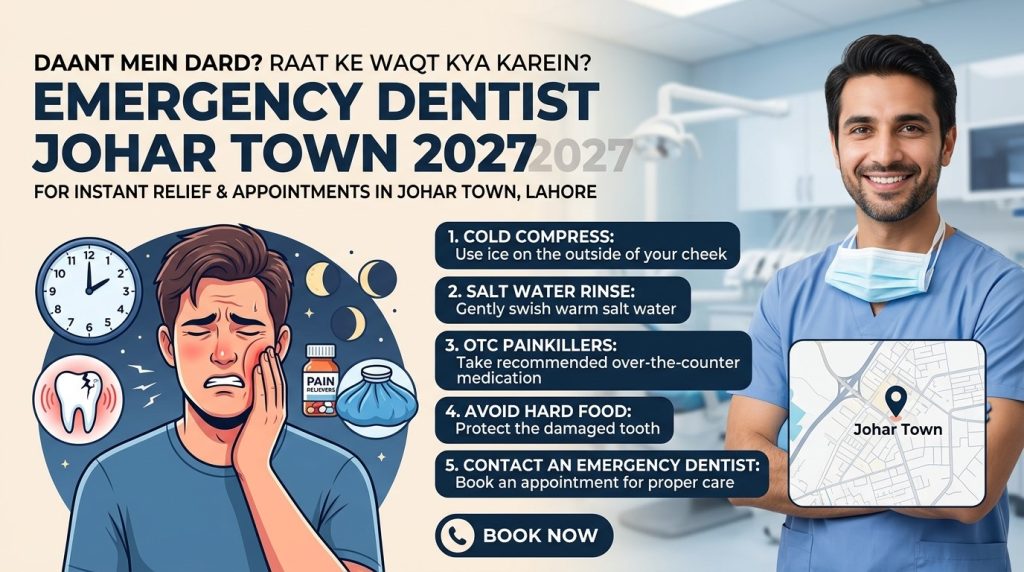
- Apply a cold compress to the outside of the cheek to reduce swelling.
- Avoid chewing on that side.
- If the break is sharp and cutting your tongue or cheek, cover it temporarily with sugar-free chewing gum or dental wax until you are seen.
Cracks range from harmless surface lines to fractures that extend into the root. Pain on biting that releases sharply when you let go is a classic sign of a deeper crack and deserves prompt attention.
A Severe Toothache
- Rinse with warm salt water (half a teaspoon of salt in a glass of warm water).
- Gently clean around the tooth with floss to dislodge trapped food, a common cause of sudden pain.
- Take an over-the-counter pain reliever such as paracetamol or ibuprofen according to the label, if you have no medical reason to avoid them.
- Keep your head slightly elevated when resting, which can ease throbbing.
- Do not place aspirin on the gum. It does not numb the tooth and can burn the gum tissue.
Toothache that is severe, lingering, or paired with swelling or fever is not something to manage at home for long. Pain medicine treats the symptom, not the cause.
Swelling of the Gum or Face
Swelling usually signals infection. Apply a cold compress to the outside of the face in 15-minute intervals. Avoid heat, which may encourage infection to spread. Do not try to burst or drain a swelling yourself. Seek care the same day.
Bleeding After an Extraction or Injury
- Fold clean gauze or a clean cloth and press firmly on the area for 20 to 30 minutes without checking repeatedly.
- A moistened black tea bag can be used in place of gauze, as tea contains tannins that help blood clot.
- Avoid rinsing vigorously, spitting, drinking through a straw, or smoking, as these can dislodge the clot.
- If bleeding persists beyond about 30 minutes of firm pressure, or is heavy, seek urgent care.
A Lost Crown or Filling
Keep the crown if you have it. Clean it and, if the tooth is sensitive, you can temporarily hold it in place with a dab of over-the-counter dental cement from a pharmacy, following the product instructions. Never use household glue. If the crown is gone, avoid very hot, cold, or sticky foods and book a visit soon, since an exposed tooth is prone to decay and fracture.
Soft Tissue Injuries
Cuts to the lips, tongue, or cheeks should be rinsed gently and held with firm pressure to stop bleeding. A cut that continues bleeding, is deep, gapes open, or goes through the lip edge may need stitches, so seek care promptly.
Orthodontic Problems
A wire poking into the cheek can often be nudged back with a cotton bud or covered with orthodontic wax. A loose bracket usually is not an emergency unless it causes pain or injury. Call the treating clinic for guidance rather than cutting wires yourself.
When to Go to a Hospital Instead
Some situations are beyond what a dental clinic should handle first. Go to the nearest hospital emergency department if you have:
- Swelling that spreads to the eye, neck, or under the jaw or tongue
- Difficulty breathing, swallowing, or opening the mouth fully
- Fever with facial swelling, especially if you feel generally unwell
- Facial trauma with signs of a head injury, such as loss of consciousness, repeated vomiting, confusion, or severe headache
- Suspected jaw fracture, such as an inability to close your teeth together properly after an impact
- Uncontrolled bleeding that does not stop with sustained pressure
A serious spreading infection in the floor of the mouth or neck is rare but can become life-threatening because swelling can compromise the airway. This is the one situation where a few hours of “waiting to see” is dangerous.
Why Waiting Costs More: How a Tooth Infection Progresses
Many people treat tooth pain with tablets and hope it fades. Understanding how dental infections develop explains why that gamble often backfires.
A tooth has three main layers: hard enamel on the outside, softer dentin beneath it, and the pulp, which holds the nerves and blood vessels, at the center. Decay or a crack allows bacteria to move inward through these layers.
- Stage 1: Enamel and dentin involvement. The tooth may be sensitive to sweet or cold. Treatment is usually a simple filling.
- Stage 2: Reversible pulp inflammation. Sharp, brief pain to cold or sweets that fades quickly. A filling can often still save the nerve.
- Stage 3: Irreversible pulp inflammation. Lingering pain, spontaneous throbbing, or night pain. The nerve usually cannot recover, and root canal treatment or extraction becomes necessary.
- Stage 4: Pulp death and abscess. Pain may suddenly stop because the nerve has died, but bacteria continue to multiply and can form a pocket of pus at the root tip. Swelling, a gum boil, or bad taste may appear.
- Stage 5: Spreading infection. In some cases the infection spreads into the surrounding tissues of the face and neck, which is a medical emergency.
This progression is why a toothache that “goes away” is not always good news, and why treatment choices narrow with delay. A problem that needed a small filling in Stage 1 can need a root canal and a crown in Stage 3, or an extraction and replacement in Stage 4. The pattern is consistent across dentistry: earlier treatment generally preserves more of the natural tooth and costs less overall.
An Original Look: The “Three-Question Urgency Test”
Patients often hesitate to call because they do not want to waste anyone’s time. A simple self-check can help you decide whether to phone a dentist now. Ask yourself three questions:
- Is it getting worse? Pain that intensifies hour by hour, swelling that grows, or bleeding that returns after stopping are signs of an active problem. Stable, mild discomfort can usually wait for a routine appointment. Worsening symptoms cannot.
- Is a basic function affected? If you cannot sleep, eat, speak comfortably, or open your mouth properly, the issue has moved beyond a nuisance.
- Is there a visible or physical sign? A broken edge, a lump on the gum, a swollen cheek, a displaced tooth, or a bad taste with fever points to something that needs a professional assessment, not more tablets.
If the answer to any of the three is yes, call a dentist the same day. If the answer to all three is no, a prompt but routine appointment is usually enough. If you are unsure, call anyway. A short conversation with the clinic team is a reasonable way to sort out urgency.
Why a Local Emergency Dentist in Johar Town Makes a Difference
Johar Town is a large, busy residential and commercial area of Lahore, and traffic across the city can turn a short trip into a long one. For most emergencies, a difference of an hour will not change the outcome. For a few, it will. A knocked-out tooth is the clearest example, and a rapidly worsening swelling is another.
Beyond travel time, there are three additional reasons a nearby, familiar clinic matters:
- Continuity. A clinic that already holds your dental records, X-rays, and history can assess an emergency faster and with fewer surprises, for instance, by knowing which teeth already have fillings or root canals.
- Follow-up. Emergency treatment is often the first step. Crowns, root canals, and re-checks need further visits, and proximity makes it easier to complete them.
- Peace of mind. Knowing in advance where you would go and having the number saved on your phone removes a lot of stress when something goes wrong.
What Happens During an Emergency Dental Visit
Knowing what to expect can ease anxiety. A well-run emergency dentist in Johar Town usually follows this sequence.
- Triage and history. The team asks when the problem began, what caused it, whether there is swelling or fever, what medications you take, and whether you have conditions such as diabetes, heart problems, or allergies. This conversation matters because it can change which medicines and anesthetics are safe for you.
- Examination. The dentist inspects the teeth, gums, and soft tissues, checks the bite, and may tap or test the affected tooth with cold to identify the source of pain. The tooth that hurts is not always the tooth that is damaged, since pain can be referred.
- Imaging. A small dental X-ray helps reveal decay beneath fillings, infection at the root tip, fractures, and bone changes. Dental X-rays use very low radiation doses, and protective measures are standard.
- Pain control. Local anesthesia is used so that treatment is comfortable. In an inflamed area, anesthetic can be less effective, and a good clinician will take the time needed to achieve proper numbness.
- Stabilizing treatment. Depending on the problem, this may include one of the following:
- A filling or temporary restoration
- Bonding or repair of a fractured tooth
- Cleaning out the nerve space (starting root canal treatment) to relieve pain
- Drainage of an abscess
- Repositioning and splinting a displaced or reimplanted tooth, usually for one to two weeks for permanent teeth
- Extraction, if the tooth cannot be saved
- Medication, if needed. Antibiotics are not an automatic part of every emergency. For many dental infections, the definitive solution is treating the source, meaning draining the abscess, removing the infected nerve, or extracting the tooth. Antibiotics are generally reserved for cases with spreading infection, fever, or when the patient’s health makes the infection riskier. Taking antibiotics without treating the underlying cause usually brings only temporary relief.
- Aftercare and follow-up. You should leave knowing what was done, what to expect, what to avoid, what warning signs mean you should return, and what the next step is.
Common Emergency Treatments Explained
Root canal treatment. When the nerve is irreversibly inflamed or infected, the dentist removes the damaged pulp, cleans and shapes the canals, and seals them. A crown is usually recommended afterward on back teeth to prevent fracture. This is often the way to save a tooth that would otherwise be lost.
Extraction. Sometimes the tooth is too broken, too infected, or has too little healthy structure left to restore. Extraction ends the infection and relieves pain. The dentist will discuss replacement options, such as a bridge or implant, to prevent neighboring teeth from drifting.
Splinting. For loosened or reimplanted teeth, a thin flexible wire or splint holds the tooth steady while the supporting tissues heal.
Abscess drainage. Releasing trapped pus relieves pressure and pain, and is often combined with treating the cause.
Bonding and temporary crowns. These protect and cover damaged teeth until a permanent restoration is made.
Management of dry socket. A tooth extraction site can sometimes lose its protective blood clot, usually two to four days after the procedure, causing intense, radiating pain. It is more common after lower wisdom tooth removal and in smokers. A dentist can clean the socket and place a medicated dressing for quick relief.
Treatment of pericoronitis. This is an infection of the gum flap around a partly erupted wisdom tooth, causing pain, swelling, and difficulty opening the mouth. Treatment involves cleaning, irrigation, and sometimes antibiotics or removal of the tooth.
Medication Safety at Home
Over-the-counter medicines can bridge the gap until you are seen, but they carry real risks if used carelessly.
- Paracetamol is generally well tolerated. Never exceed the dose on the label, and watch for paracetamol hidden in combination cold and flu products.
- Ibuprofen and similar anti-inflammatories can help with dental pain and swelling, but are not suitable for everyone. People with stomach ulcers, kidney disease, certain heart conditions, or asthma triggered by anti-inflammatories, and those who are pregnant, should check with a doctor or pharmacist first.
- Do not self-prescribe antibiotics left over from earlier illnesses. Incorrect antibiotics and incomplete courses contribute to antibiotic resistance, can mask the problem, and do not fix a tooth that needs treatment.
- Avoid clove oil overuse. A small amount on a cotton bud may temporarily soothe pain, but concentrated oil can irritate or burn the gum and mouth.
- Children need doses based on weight and age. Follow the product label and ask a pharmacist or doctor if unsure. Aspirin should not be given to children.
Emergencies in Special Groups
Children. Children’s dental trauma is common, especially during sports and play. Remember not to replant baby teeth, but do see a dentist after any injury to the mouth. Swelling, a tooth that has changed color after a knock, or a tooth pushed into the gum all need assessment.
Pregnant patients. Dental emergencies can be treated safely during pregnancy, and untreated infection poses its own risks. Treatment is generally best planned with the patient’s doctor in mind, and the dentist should know about the pregnancy so that medication and X-ray choices are appropriate. Necessary X-rays are performed with protective shielding.
People with diabetes. Infections can be harder to control and healing may be slower. Tell the dentist about your condition, and monitor blood sugar if eating is disrupted by pain.
People on blood thinners. Bleeding after extractions may be more difficult to control. Do not stop prescribed medicines yourself. Inform the dentist so the plan can be coordinated with your doctor.
Older adults. Dry mouth, medications, and gum recession make decay and infection more likely. Broken dentures or a lost crown that prevents eating can affect nutrition and deserves prompt attention.
Building a Simple Dental Emergency Kit
A small kit at home takes five minutes to assemble and can make a stressful moment easier:
- Your dentist’s phone number, saved in your phone and written down
- Gauze pads or clean cotton cloths
- A small container with a lid, for storing a knocked-out tooth in milk
- Paracetamol (and ibuprofen if suitable for your household)
- Orthodontic wax, if anyone in the family wears braces
- Dental floss and a soft toothbrush
- Temporary dental cement from a pharmacy
- An ice pack or cold compress
In Lahore’s hot summers, remember that a knocked-out tooth should be kept cold in milk, not left in a warm car or pocket.
How to Choose an Emergency Dentist in Johar Town
When you are in pain, it is tempting to go to the first clinic you find. If possible, make this choice before an emergency happens. Useful checks include:
- Registration and qualifications. Confirm that the dentist is registered with the Pakistan Medical and Dental Council (PM&DC).
- Emergency availability. Ask whether same-day appointments are offered, what the clinic’s opening hours are, and what it does for after-hours problems.
- Diagnostic capability. A clinic able to take X-rays on site can diagnose and treat much faster.
- Infection control. You should be able to see sterilized instruments, clean surfaces, and disposable items used properly. Do not hesitate to ask about sterilization practices.
- Transparent pricing. A reputable clinic explains the likely costs after examination and provides estimates before starting larger treatment.
- Honest advice. Be wary of any clinic that always recommends the most expensive option, pressures you quickly, or promises guaranteed outcomes. A good dentist will tell you when a tooth cannot be saved, and when a cheaper, simpler option will do.
- Follow-up care. Emergency treatment often needs a follow-up plan, so ask who will see you next and when.
How Elora Dental and Aesthetics Approaches Urgent Care
Elora Dental and Aesthetics is based in Johar Town, Lahore, and provides general, restorative, and cosmetic dental care. A responsible approach to emergencies in a clinic like this follows a few clear principles:
- Relieve pain and control the problem first. Comfort and stabilization come before anything elective.
- Diagnose properly. Examination and imaging are used to find the true source of the problem rather than guessing.
- Explain the options. Patients are told what is wrong, what the choices are (including saving versus removing a tooth), and what each is likely to cost and involve.
- Save natural teeth where reasonable. When a tooth can be predictably saved, that is generally preferable. When it cannot, extraction with a replacement plan is explained honestly.
- Plan the follow-up. Emergency care is rarely the end of the story, and the clinic should outline the steps to complete treatment properly.
Because the clinic also offers cosmetic and restorative services, urgent repair of a broken front tooth can be handled with the final appearance in mind, rather than just a quick fix. Please contact the clinic directly to confirm current opening hours, emergency availability, services, and fees before you travel, as these can change.
Preventing the Next Emergency
Most dental emergencies have a cause that could have been prevented or caught early.
- Visit a dentist every six months, or as advised. Check-ups find small cavities, cracked fillings, and gum problems before they hurt. Many severe toothaches begin as painless decay that was never examined.
- Brush twice a day with fluoride toothpaste and clean between teeth daily.
- Wear a mouthguard for contact sports. A properly fitted guard substantially lowers the risk of tooth fractures and jaw injuries. Cricket, football, and martial arts all carry risk.
- Treat teeth grinding. Nighttime grinding can crack teeth and loosen restorations. A custom nightguard helps.
- Do not use teeth as tools. Opening bottles, tearing packets, or cracking nuts and ice breaks teeth.
- Replace failing restorations on time. Old fillings and crowns with visible gaps, chips, or recurring food trapping are warnings.
- Address wisdom teeth early if they are repeatedly infected or partially erupted.
- Limit sugary snacks and drinks, and avoid tobacco, including paan and gutka, which harm the gums and raise the risk of serious oral disease.
- Do not ignore small symptoms. Brief sensitivity, bleeding gums, or a rough edge is the body’s early warning.
Myths That Make Emergencies Worse
“If the pain stops, the problem is gone.” As explained above, pain can stop when the nerve dies, while infection continues.
“Antibiotics will fix a toothache.” They may reduce symptoms in some infections but rarely solve the underlying problem, which usually needs dental treatment.
“Put aspirin on the tooth.” This can burn the gum and does not numb the tooth.
“A knocked-out tooth cannot be saved once it has fallen on the ground.” Dirt matters less than time and storage. A quick, gentle rinse and rapid reimplantation or storage in milk give a good chance.
“Root canals are extremely painful.” The pain people associate with root canals is usually from the infection itself. With modern anesthesia, the treatment is generally comparable to getting a filling.
“Emergency dentistry is only for extractions.” Many emergencies are resolved by saving the tooth through repair, root canal treatment, or splinting.
Conclusion
Dental emergencies are frightening because they are painful and unexpected, but the right response is simple: stay calm, protect the tooth or injured area, control pain and swelling, and get professional help quickly. Know the signs that mean a hospital rather than a dental clinic, avoid the common myths, and remember that pain that disappears is not proof of healing.
The best time to prepare for an Emergency Dentistry Johar Town is before one happens. Save your dentist’s number, assemble a small first-aid kit, schedule the check-up you have been postponing, and treat small symptoms seriously. For residents of Johar Town, having a trusted local clinic such as Elora Dental and Aesthetics to call can turn a crisis into a manageable problem. Make it a goal to have a dentist you trust and a regular care routine in place well before the end of 2027, so that if an emergency does come, you already know exactly where to turn.
Frequently Asked Questions
1. How do I know if my toothache is an emergency?
Treat a toothache as urgent if the pain is severe, constant, or wakes you at night, if it does not respond to over-the-counter pain relief, or if it comes with swelling, fever, a bad taste, or a pimple-like bump on the gum. Brief sensitivity to cold that settles within seconds is usually less urgent and can be assessed at a routine visit. If the pain is worsening or you are unsure, call a dentist the same day.
2. What should I do if my tooth gets knocked out?
Pick it up by the crown without touching the root, rinse it briefly with milk or saline if dirty, and try to reinsert it in the socket, then see a dentist immediately. If you cannot reinsert it, keep it in cold milk. The best outcomes occur when the tooth is replanted within about an hour. Do not replant a baby tooth, but have the child checked.
3. Why does a toothache often feel worse at night?
Lying flat increases blood flow to the head, raising pressure inside an already inflamed tooth. There are also fewer distractions at night, so pain feels more intense. Pain that regularly disturbs sleep is a sign the nerve may be seriously inflamed and that an appointment should not be delayed.
4. How much does an emergency dental visit cost in Lahore?
The cost depends on what the problem turns out to be, such as a simple filling, drainage of an abscess, a root canal, or an extraction, and on whether imaging and follow-up work are needed. A reputable clinic should explain the diagnosis and give an estimate after examining you. Contact the clinic directly to confirm current consultation fees and treatment costs.
5. Why shouldn’t I ignore a swollen face or gum?
Swelling usually means infection that the body cannot clear alone. If left untreated, it can spread through the soft tissues of the face and neck, and in rare cases threaten breathing. Mild, localized swelling needs same-day dental care, while swelling that is spreading, affects swallowing or breathing, or comes with fever needs hospital emergency care immediately.