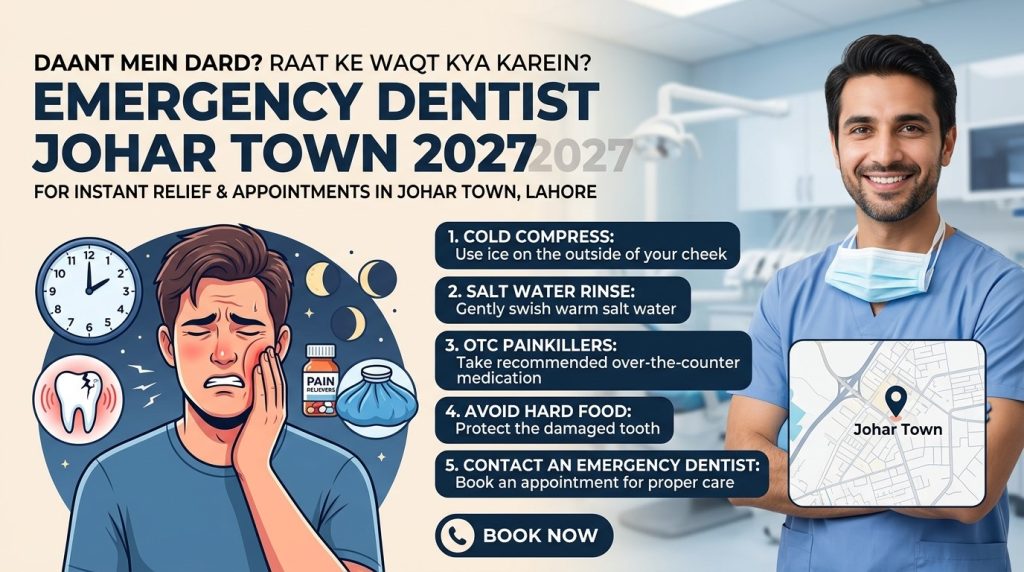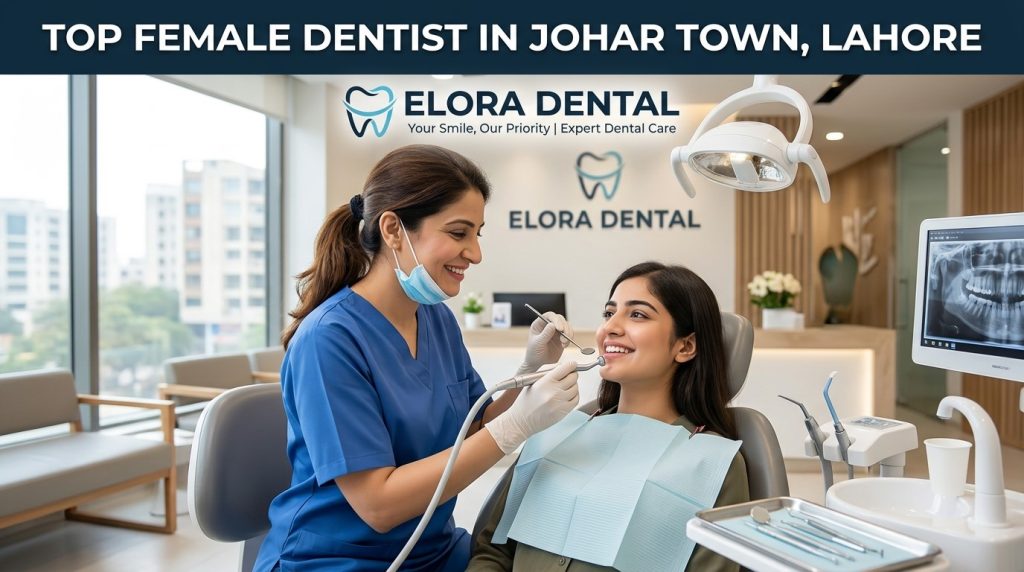
Dental pain rarely waits for a convenient moment. It shows up at midnight, during a family dinner, in the middle of a work deadline, or right before a wedding. For residents of Johar Town and the surrounding areas of Lahore, including Faisal Town, Model Town, Township, Wapda Town, and Garden Town, knowing exactly what to do when a dental emergency strikes can mean the difference between saving a tooth and losing it permanently. This guide, from the team at Elora Dental and Aesthetics, goes beyond the generic “see a dentist immediately” advice you’ll find on most websites. It walks through what actually counts as an Emergency Dentist in Johar Town, what to do in the first few critical minutes, what happens once you’re in the chair, and how to make smarter decisions under pressure.
What Actually Counts as a Dental Emergency?
Not every ache or chip requires a same-day visit, and not every dental problem that feels urgent actually is one. Understanding the difference helps you act quickly when it matters and avoid unnecessary panic when it doesn’t.
True dental emergencies generally share three features: active bleeding that won’t stop, a level of pain that is not manageable with over-the-counter medication, or a risk of permanent damage if treatment is delayed by more than a few hours. Examples include:
- A tooth that has been completely knocked out (avulsed)
- A tooth that is cracked, fractured, or broken with visible nerve exposure or severe pain
- Uncontrolled bleeding from the mouth following an injury or extraction
- A dental abscess with facial swelling, especially swelling that is spreading toward the eye or throat
- Severe, throbbing pain that disrupts sleep or normal function
- A jaw that may be fractured or dislocated
- A crown, bridge, or filling that has come loose and is exposing a painful nerve
Situations that can usually wait for a regular next-day appointment include a minor chip with no pain, mild sensitivity to hot or cold, a lost filling with no pain, or a loose baby tooth in a child. These still deserve attention soon, but they are not middle-of-the-night emergencies.
The distinction matters because rushing unnecessarily can add stress and cost, while underestimating a genuine emergency can lead to tooth loss, spreading infection, or in rare but serious cases, infections that travel beyond the mouth into the neck or bloodstream.
Why “Minutes Matter” Is Not Just a Marketing Line
Dentists repeat the phrase “time matters” so often that it can start to sound like a sales pitch. It isn’t. For a handful of specific situations, the biology genuinely works against you as the clock ticks.
Knocked-out permanent teeth are the clearest example. The periodontal ligament the thin layer of tissue that anchors a tooth root to the jawbone- begins to die once it dries out. Research on tooth replantation consistently shows that a tooth reinserted into its socket within 30 minutes has a meaningfully higher chance of long-term survival than one reinserted after an hour, and the odds decline sharply after that. This is why dentists insist on specific handling instructions (covered below) rather than simply saying “get here fast.”
Dental abscesses are the second case where speed matters for a different reason: containment. An abscess is a pocket of bacterial infection. Left untreated, it doesn’t stay put it can spread into surrounding soft tissue (cellulitis), track along fascial planes in the face and neck, or in rare cases progress toward the airway or bloodstream. Swelling that affects the eye, extends into the neck, or comes with fever and difficulty swallowing or breathing is a signal to go to a hospital emergency room, not just a dental clinic.
Severe trauma to the jaw or facial bones also falls into the true-emergency category, particularly if there is difficulty closing the bite normally, numbness in the lip or chin, or visible asymmetry; these can indicate a fracture that needs imaging and possibly maxillofacial referral alongside dental care.
Step-by-Step: What to Do Before You Reach the Clinic
Most guides stop at “come in right away.” The few minutes before you arrive at Elora Dental and Aesthetics can materially affect the outcome, so here is what to actually do, broken down by situation.
Knocked-Out Tooth (Avulsion)
- Pick the tooth up by the crown (the white chewing surface), never the root.
- If it’s dirty, rinse it briefly with milk or saline — not tap water, and don’t scrub it. Scrubbing removes the ligament fibers that help it reattach.
- If possible, gently reinsert it into its socket facing the correct direction and bite down softly on a clean cloth to hold it in place.
- If reinsertion isn’t possible, store the tooth in a container of milk, or have the person hold it in their own mouth (between cheek and gum) if they’re old enough to safely avoid swallowing it. Avoid plain water — it damages the root surface cells.
- Get to the clinic within 30 minutes if at all possible. Every additional 30 minutes lowers the odds of successful replantation.
Severe Toothache
- Rinse the mouth with warm salt water to clear debris.
- Floss gently around the tooth in case food is trapped and contributing to pressure.
- Take an appropriate over-the-counter pain reliever, but avoid placing aspirin directly against the gum or tooth — this can burn the soft tissue.
- Apply a cold compress to the outside of the cheek in 15-minute intervals, not directly on the tooth.
- Avoid extremely hot or cold food and drinks until seen.
Chipped or Fractured Tooth
- Save any broken fragment if you can find it, kept moist in milk or saliva.
- Rinse your mouth with warm water.
- If there’s bleeding, apply gentle pressure with clean gauze.
- Cover any sharp edges with dental wax or, in a pinch, sugar-free gum, to protect your tongue and cheek until you’re seen.
Lost Filling or Crown
- Keep the crown if it’s intact it can often be re-cemented.
- Temporary dental cement (available at pharmacies) can be used to keep it in place short-term. Never use household super glue.
- Keep the area clean and avoid chewing directly on that tooth.
Abscess or Facial Swelling
- Rinse with warm salt water several times a day to encourage drainage and reduce bacterial load.
- Do not apply heat to the outside of the face; this can worsen swelling. Cold compresses are safer.
- Do not attempt to drain the abscess yourself.
- Watch closely for swelling near the eye, difficulty swallowing, or fever; these warrant immediate hospital-level care, not just a dental visit.
Uncontrolled Bleeding
- Bite down on a clean, damp gauze pad or tea bag (the tannins in tea can help constrict blood vessels) with firm, steady pressure for 15–20 minutes without checking repeatedly.
- Keep your head elevated rather than lying flat.
- If bleeding hasn’t slowed significantly after 20 minutes of continuous pressure, seek care immediately.
What Happens When You Arrive at Elora Dental and Aesthetics
Understanding the process in advance reduces anxiety considerably, especially for patients who haven’t experienced an emergency dental visit before.
Triage and pain control first. The initial priority is almost always getting pain under control and assessing whether the situation is stable, infected, or actively worsening. This usually means a focused exam, sometimes combined with a digital X-ray to see below the gumline; cracks, abscesses, and bone-level damage are frequently invisible to the naked eye.
Diagnosis before treatment decisions. Emergency dentistry isn’t just about stopping pain in the moment; the underlying cause has to be identified so the treatment actually solves the problem rather than masking it temporarily. A tooth that’s cracked below the gumline, for instance, may need a very different approach than one that’s simply sensitive from an exposed nerve.
Treatment options are explained, not just performed. Depending on the diagnosis, a patient might need a temporary filling to stabilize a tooth until a permanent restoration can be planned, root canal therapy to remove infected pulp and save a natural tooth, extraction if the tooth is unsalvageable, or drainage and antibiotics for an abscess. Patients are walked through what each option means, including trade-offs, so decisions aren’t made in a rush.
Follow-up planning. An emergency visit often stabilizes the immediate problem, with a structured follow-up plan for definitive treatment (like a crown after a root canal, or an implant consultation after an extraction) scheduled once the acute issue has resolved.
Why Location and Response Time Actually Matter in Johar Town
Johar Town sits at a major crossroads of Lahore, bordered by some of the city’s busiest arteries: Canal Road, Barkat Market, and the routes connecting to Model Town and Faisal Town. This matters more than it might seem for dental emergencies specifically, because of the 30-minute window relevant to knocked-out teeth and the general principle that faster access to care reduces complications across nearly every emergency category.
A clinic within a familiar, centrally located neighborhood shortens the single biggest variable a patient controls in an emergency: travel time. This is particularly relevant during Lahore’s peak traffic hours, when a clinic located deep inside a congested commercial zone can add 20–30 minutes to a trip that should take five. For families in Johar Town, having emergency dental care that doesn’t require crossing the city is a genuine clinical advantage, not just a convenience.
Cost Considerations for Emergency Dental Visits
One of the more poorly explained aspects of emergency dentistry — and a common source of anxiety is cost uncertainty. A few points that are rarely spelled out clearly:
- Emergency visits are typically priced in two parts: an initial assessment/consultation fee, and then the treatment itself once a diagnosis is made. The consultation is rarely the expensive part; it’s the treatment path (root canal vs. extraction vs. filling) that determines the bulk of the cost.
- X-rays are usually necessary, not optional upselling. Because so many emergency problems (cracks, abscesses, bone involvement) aren’t visible on a surface exam, imaging is often what prevents a second emergency visit a few weeks later from a missed diagnosis.
- The cheapest immediate option isn’t always the cheapest long-term one. Extraction is often less expensive upfront than root canal therapy plus a crown, but tooth loss can lead to shifting teeth, bite problems, and the eventual need for an implant or bridge which usually costs more in total than saving the natural tooth would have.
- Ask directly about payment plans or phased treatment if cost is a concern — most clinics, including Elora Dental and Aesthetics, can stage non-urgent parts of treatment (like a permanent crown) after the emergency portion is resolved, spreading out the financial impact.
Preventing the Next Emergency
Emergency visits often reveal patterns that a routine check-up would have caught earlier. A few less commonly discussed prevention points:
- Old, large fillings are a common source of “sudden” emergencies. A filling placed 10–15 years ago doesn’t fail overnight it weakens gradually, and the tooth around it becomes more brittle. What feels like a random crack while eating is frequently the final stage of years of slow deterioration.
- Teeth grinding (bruxism) is an under-diagnosed cause of night-time dental pain. Many patients who show up with an “unexplained” toothache are grinding their teeth in their sleep, often stress-related, and a simple night guard prevents repeat emergencies.
- Ice, pen caps, and opening packaging with your teeth are disproportionately common causes of fractured teeth, far more than most patients expect. Molars are strong for chewing food, not for tasks they weren’t designed for.
- Untreated gum disease weakens the bone support around teeth, making them more vulnerable to becoming loose or abscessing after relatively minor trauma or infection.
Choosing the Right Emergency Dentist
A few practical questions worth asking before you actually need emergency care (not during the emergency itself):
- Does the clinic offer same-day emergency appointments, or only scheduled ones?
- Is a dentist available by phone for immediate guidance before you travel in?
- What imaging technology is on-site, so you’re not sent elsewhere for X-rays mid-emergency?
- What’s the clinic’s approach to tooth-saving treatment (root canals, splinting) versus defaulting to extraction?
At Elora Dental and Aesthetics, emergency care is treated as a distinct category of dentistry, not a rushed version of a routine visit, but a structured process built around fast diagnosis, clear explanation of options, and treatment that prioritizes saving your natural teeth wherever it’s clinically sound to do so.
Final Thoughts
A dental emergency is stressful precisely because it’s unplanned but the outcome is rarely left entirely to chance. What you do in the first few minutes, how quickly you get seen, and whether the clinic treating you looks past the immediate pain to the underlying cause all shape whether you walk away with a tooth saved or a bigger problem down the line. Keeping this guide in mind and knowing where to go turns a frightening situation into a manageable one.
Frequently Asked Questions
1. How do I know if my toothache is a real emergency or something that can wait until my next appointment?
A useful rule of thumb: if the pain is severe enough to disrupt sleep or daily function, is accompanied by swelling, or comes with a fever, treat it as an emergency. Mild, intermittent sensitivity without swelling can usually wait a day or two for a scheduled visit, but it shouldn’t be ignored indefinitely.
2. My tooth got knocked out; can it really be saved?
Often, yes, especially if it’s a permanent (adult) tooth and you act within about 30 minutes. Success depends heavily on how the tooth was handled beforehand; keeping it moist and avoiding touching the root are the two biggest factors within your control before reaching the clinic.
3. Is it safe to take painkillers while waiting for an emergency dental appointment?
Standard over-the-counter pain relievers are generally fine to manage discomfort until you’re seen, but avoid placing any tablet, including aspirin, directly against the gum or tooth, since this can chemically burn the soft tissue. If you have underlying health conditions or are on other medications, confirm dosing with a pharmacist first.
4. What if my dental emergency happens outside normal working hours?
Facial swelling that spreads toward the eye or neck, difficulty breathing or swallowing, or bleeding that won’t stop after sustained pressure are signs to go to a hospital emergency room rather than wait. For pain or trauma that’s serious but not life-threatening, contacting the clinic directly for guidance on next steps is the safest first move.
5. Will an emergency visit always mean I need a tooth pulled?
No extraction is one option among several, and dentists generally try to preserve a natural tooth when it’s clinically viable, since a saved tooth typically functions better long-term than a replacement. The right treatment depends entirely on the diagnosis, which is why an exam (often with an X-ray) comes before any treatment decision is made.