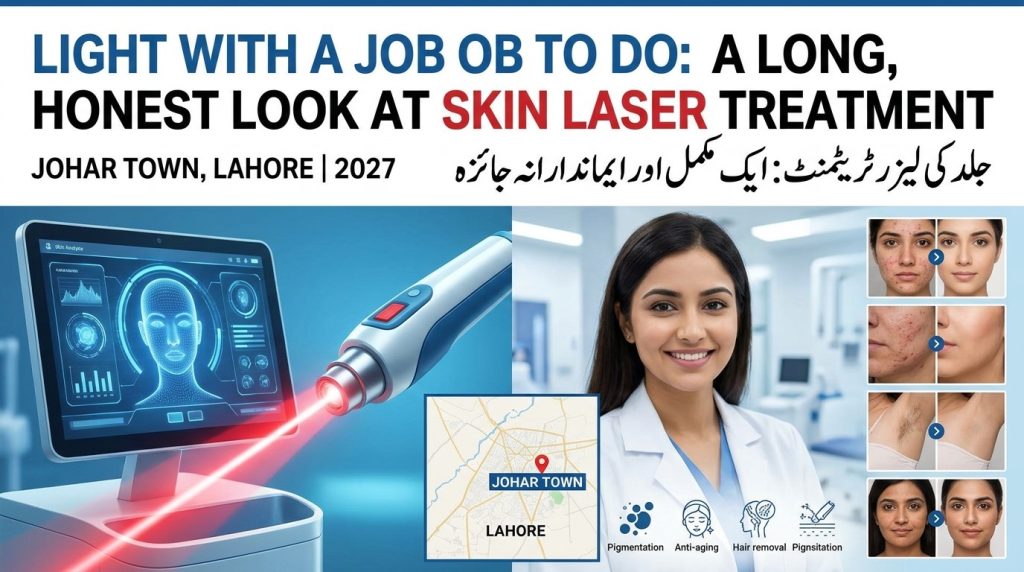
Laser treatment has changed how people approach their skin. Procedures that once belonged to hospital dermatology departments are now offered by aesthetic clinics across Lahore, and Johar Town, with its dense mix of residential blocks and healthcare providers, has become a natural place for patients to look. The questions people ask have also matured. They no longer ask only whether a laser can remove unwanted hair or fade a mark. They want to know which laser, on what skin tone, operated by whom, and with what risk.
How Skin Laser Treatment Johar Town Lahore works, what the main treatment categories can and cannot achieve, why skin tone is the central safety issue for patients in Pakistan, how to judge a clinic, what to expect before and after treatment, and how to build a realistic plan that runs to the end of 2027. It also looks at where Elora Dental and Aesthetics fits among local options. The goal is not to promote any single procedure but to give you enough understanding to ask better questions and make a decision you will be comfortable with.
How a Skin Laser Works
The word “laser” describes a device that emits light of a single, specific wavelength. In skin treatment, that light is absorbed by a target, known technically as a chromophore. The main targets are melanin (the pigment in skin and hair), hemoglobin (in blood vessels), and water (in skin tissue). Once absorbed, the light energy becomes heat. The aim is to heat and treat the target while sparing the tissue around it.
Three variables determine what a laser does:
Wavelength. Different wavelengths are absorbed by different targets and penetrate to different depths. A wavelength well absorbed by melanin suits hair and pigment, while one absorbed by water suits resurfacing.
Pulse duration. The length of each pulse of light affects how heat spreads. Very short pulses can shatter pigment particles with minimal heat spread, while longer pulses heat a larger structure such as a hair follicle.
Energy (fluence) and spot size. More energy increases effect and risk. Larger spots penetrate deeper. Settings must be matched to the patient’s skin, the body area and the problem.
Cooling is the fourth, often overlooked element. Contact cooling, cold air or cryogen spray protects the surface of the skin during treatment and reduces discomfort and risk of burns.
Because so many variables interact, there is no single “skin laser.” The term covers several distinct technologies, and the right one depends on the concern.
The Main Categories of Laser Treatment
Laser hair reduction
Laser hair removal targets the melanin in the hair shaft and follicle. The follicle absorbs heat and is damaged so that growth slows or stops. Because hair grows in cycles, and only follicles in the active growth phase are vulnerable, a course of several sessions spaced several weeks apart is normally needed.
The result is generally described as long-term hair reduction, not guaranteed permanent removal. Patients often see a significant drop in density, but some hair can return, particularly where hormones play a role. Fine, light-colored or grey hair contains little pigment and responds poorly. Dark, coarse hair on lighter skin responds most readily, which is why skin tone matters so much in this field.
Several laser types are used, including diode, alexandrite, and long-pulse Nd: YAG devices. Longer-wavelength options such as Nd:YAG are commonly considered safer for darker skin because they are absorbed less by surface melanin, though they may be somewhat less effective on fine hair. The best device for a patient depends on skin type, hair type, and the experience of the operator.
Pigmentation and tone correction
Pigment-targeting lasers deliver very short, intense pulses that fragment excess melanin, which the body then clears. They are used for sun spots, some freckles and certain discolorations. Not all pigmentation is the same, and treating the wrong type with the wrong laser can make matters worse.
Melasma deserves special mention. It is a common, hormonally influenced pigmentation condition, especially in women with medium to deeper skin tones, and it is notorious for recurring. Heat and inflammation can aggravate it, so aggressive laser treatment can backfire. Many dermatology practitioners favor a cautious, combined approach for melasma, using topical treatments, strict sun protection and, in selected cases, gentle low-energy laser settings. A clinic that promises a guaranteed cure for melasma should prompt skepticism.
Post-inflammatory hyperpigmentation, the dark marks left after acne or injury, is another frequent concern. It often fades gradually with time, sun protection and topical care, and laser may help in selected cases but is not always necessary.
Fractional resurfacing for scars and texture
Fractional lasers create thousands of microscopic columns of controlled injury in the skin, leaving the tissue between them intact. The skin responds by producing new collagen and remodeling its surface. They are used for acne scars, uneven texture, enlarged-looking pores, and fine lines.
There are two broad types. Ablative fractional lasers vaporize microscopic columns of tissue and produce stronger results but need more downtime, with redness, swelling, and peeling lasting days to weeks. Non-ablative fractional lasers heat the tissue without removing it, with milder downtime but usually a larger number of sessions.
Scars vary. Rolling and boxcar scars may respond reasonably, while deep ice-pick scars often improve only partially and may need other techniques. Expect gradual improvement over months as collagen remodels, and expect that the result is improvement, not erasure. Active acne is usually brought under control first.
Vascular lasers
Vascular lasers target hemoglobin to treat visible small blood vessels, facial redness, and certain vascular marks. They suit specific conditions and require careful selection, since the heat is concentrated in blood vessels close to the surface.
Tattoo and lesion treatments
Some lasers fragment tattoo ink or treat selected benign skin lesions. These are specialist uses, and a clinic should be honest about whether it has the right device and experience.
A note on IPL
Intense pulsed light (IPL) devices are sometimes marketed alongside lasers but are not lasers. They emit broad-spectrum light, can be effective for some concerns, and are generally less suited to darker skin because the broad spectrum is more readily absorbed by surface melanin. Ask exactly what technology is being used, and why it suits your skin.
Why Skin Tone is the Central Safety Issue in Lahore
For patients in Pakistan, the most important clinical consideration is skin tone. Dermatologists often use the Fitzpatrick scale, which classifies skin types from I (very fair) to VI (very dark) based on how skin reacts to sun. Many South Asian patients fall in types III to V.
Because laser energy is absorbed by melanin, the surface of darker skin competes with the intended target for that energy. The consequences of getting this wrong include burns, blistering, post-inflammatory hyperpigmentation (dark patches after treatment) and, less commonly, hypopigmentation (lighter patches). These effects are usually avoidable with proper technique but can be distressing and, in some cases, long-lasting.
This does not mean laser is off limits for darker skin. It means that device choice, wavelength, settings, and cooling are not negotiable details. A competent practitioner will:
- Assess and document your skin type before treatment
- Ask about tanning, sun exposure, previous reactions, scarring tendencies and medications
- Choose a device and wavelength appropriate for your skin type
- Begin with conservative settings and sometimes a test patch
- Adjust treatment based on how the skin responds
Be cautious about any clinic that applies the same settings to everyone, avoids discussing skin type, or promises identical results regardless of complexion.
The Climate Factor
Lahore’s climate affects laser planning more than many patients realize. The strong sun from spring through early autumn raises the risk of pigmentation changes after treatment, since freshly treated skin is more sensitive to ultraviolet exposure. Many practitioners prefer to schedule certain procedures, especially resurfacing and pigment treatment, in cooler months, and insist on rigorous sun protection afterward.
Tanning before treatment is also a concern. Tanned skin contains more melanin at the surface, which increases the risk of burns and pigment disturbance. A responsible clinic may postpone treatment if you are recently tanned or sunburnt.
Who Should Take Particular Care
Laser treatment is not suitable for everyone at every time. Tell your practitioner if any of the following apply:
- Pregnancy or breastfeeding. Many elective laser treatments are deferred, and some topical products used with them may also be avoided.
- Isotretinoin use. Strong prescription acne medication can make skin more fragile and may require a waiting period before certain treatments.
- Photosensitizing medications. Some antibiotics, supplements and other drugs make skin more sensitive to light.
- Active skin infections or cold sores in the area to be treated. Cold sore history may need preventive medication.
- Keloid or unusual scarring tendency. Some people form raised scars, and this affects treatment choice.
- Autoimmune or skin conditions such as vitiligo, psoriasis, eczema or lupus, which may be affected by treatment.
- Recent tanning, sunburn or other cosmetic procedures.
- Implants, metal or skin products in or near the area.
A thorough practitioner takes a full medical history. If a clinic proceeds without asking, treat that as a warning sign.
What a Proper Consultation Looks Like
A reliable laser consultation is more than a sales conversation. It typically includes:
A medical and skin history. Medications, allergies, past reactions, sun habits, scarring tendencies, and relevant conditions.
A skin assessment. Skin type, condition of the treatment area and any factors that increase risk.
A clear explanation of options. Which laser is proposed and why, what alternatives exist, including non-laser options, and how many sessions are realistic.
A discussion of risks and limits. Temporary effects, possible complications and what results can and cannot be expected.
A written plan and estimate. Sessions, intervals, price per session or package, what is included, and what happens if the plan changes.
A test patch where appropriate. A small trial area lets the practitioner see how your skin reacts before a full session.
Consent. You should be given time to decide and not pressured to book immediately.
Who Performs the Treatment
Laser devices are medical equipment, and the person operating them matters as much as the machine. Ask who will perform your treatment, what their training is, and whether a doctor supervises. Doctors and dentists in Pakistan register with the Pakistan Medical and Dental Council, and asking about registration, specific laser training, and experience with your skin type is reasonable and expected.
Also ask which device will be used, whether it is a recognized medical-grade system, and how it is maintained. Equipment that is poorly maintained or incorrectly calibrated increases risk. Heavily discounted packages that promise rapid results can signal corners cut on equipment, training, or consumables.
What Happens During Treatment
The procedure varies by type, but a typical session includes:
Preparation. The skin is cleaned, makeup and products are removed, and for hair removal, the area is shaved. Topical numbing cream may be applied for more uncomfortable treatments.
Eye protection. Both patient and operator wear protective eyewear matched to the laser wavelength. This is non-negotiable.
Test pulses. The practitioner may fire test pulses to confirm settings and watch the skin’s response.
Treatment. Pulses are delivered across the area, usually with cooling. Sensations are commonly described as a snap, sting or warmth. Resurfacing is more intense and often needs numbing.
Post-treatment care. Cooling, soothing products and instructions for aftercare.
Sessions can last from a few minutes for small areas to an hour or more for larger ones.
Side Effects, Risks and Recovery
Most patients experience temporary effects. These commonly include redness, warmth, mild swelling, and sensitivity. Hair removal often produces small raised, red bumps around follicles that settle within hours to a couple of days. Resurfacing may produce more prominent redness, swelling, flaking or crusting lasting from days to over a week, depending on the intensity.
Less common risks include blistering, burns, infection, scarring, reactivation of cold sores and changes in pigmentation, either darker or lighter. Eye injury is a risk if protection is inadequate. Most complications are linked to inappropriate settings, inadequate assessment, sun exposure after treatment or skipped aftercare. If you notice severe pain, blistering, spreading redness, pus or fever, contact the clinic promptly.
Aftercare: The Part Patients Underestimate
Aftercare is as important as the procedure itself. A reasonable routine, adjusted to your practitioner’s instructions, includes:
- Daily broad-spectrum sunscreen with adequate protection, reapplied during the day when outdoors, and avoidance of direct sun for the period your practitioner advises
- Avoiding tanning and sunbeds before and after treatment
- Gentle cleansing and moisturizing, especially after resurfacing
- Avoiding picking, scratching or peeling treated skin
- Pausing certain products, such as retinoids, exfoliating acids and harsh scrubs, until advised
- Avoiding heat exposure, such as saunas, hot showers and intense exercise, for a short period if advised
- Following instructions on antibacterial or antiviral preparations if prescribed
Many pigment problems after laser treatment trace directly to sun exposure. In a city with Lahore’s summers, this is not a minor point.
How Many Sessions and How Much Improvement to Expect
Realistic expectations prevent disappointment.
Hair reduction. Typically a series of sessions spaced several weeks apart, with the number depending on body area, hair type, hormonal factors and device. Maintenance sessions are common. Hormonal conditions can lead to regrowth.
Pigmentation. Improvement may take several sessions, and recurrence is possible, especially with melasma. Sun protection and topical care are part of the plan, not optional extras.
Scars and texture. Gradual improvement over months, with several sessions. Deep scars may improve only partially, and combination treatments are sometimes advised.
General rejuvenation. Subtle, cumulative improvements in tone and texture, with limited downtime for gentle settings.
No responsible practitioner guarantees a specific percentage of improvement. Ask how success is measured and what happens if results fall short.
Understanding Cost
Laser treatment pricing in Lahore varies widely and depends on several factors:
The device. High-quality medical-grade systems cost significantly more to buy and maintain.
Treatment area and complexity. A small area costs less than a large one, and resurfacing costs more than a simple session.
Practitioner expertise. Experience and medical supervision add to cost.
Session numbers and packages. Most treatments require several sessions, so the total matters more than the per-session price. Packages can reduce the cost per session but require upfront payment. Check expiry dates, refund terms and what happens if you need extra sessions.
Consumables and aftercare products. Some clinics include these and some charge separately.
Be wary of prices far below the market range. A very low quote can reflect older or poorly maintained equipment, inexperienced operators or rushed assessment. In laser treatment, mistakes can leave marks that are more costly to correct than the original treatment.
Red Flags to Watch For
- No skin assessment or medical history before treatment
- Identical settings or promises for all skin types
- Guarantees of permanent or complete results
- Reluctance to name the device, the operator or their qualifications
- Pressure to buy large prepaid packages immediately
- No eye protection or inadequate cooling
- Vague or absent aftercare instructions
- Unwillingness to provide a written estimate
- Dismissal of your questions about risk
Any of these should prompt you to pause and reconsider.
Where Elora Dental and Aesthetics Fits
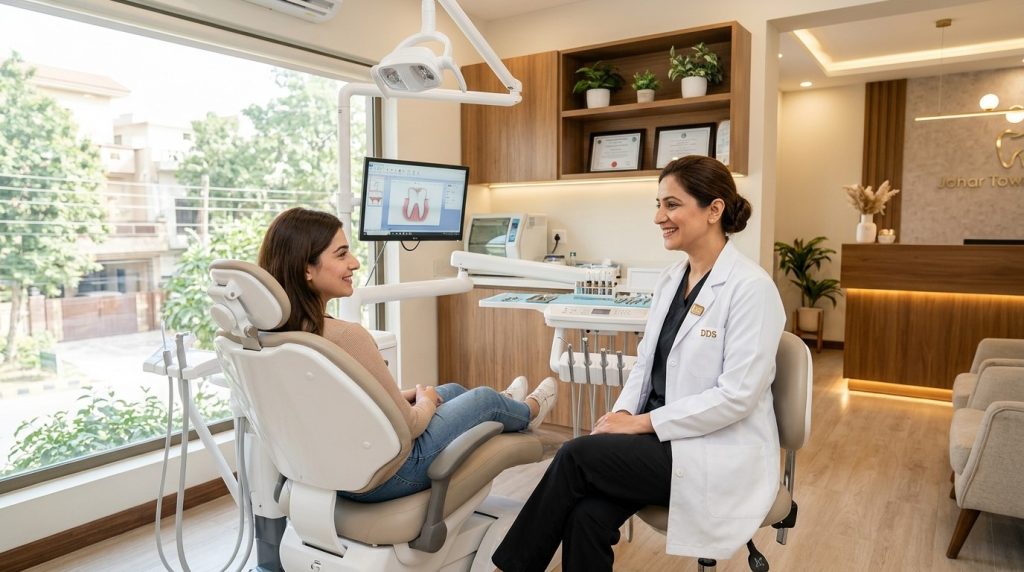
Elora Dental and Aesthetics operates in Johar Town and offers dental and aesthetic care in one setting. For patients, a combined clinic can be convenient, particularly for those who want facial aesthetics and dental treatment coordinated, since both contribute to overall appearance. It also means that a patient who already attends the clinic for dental care may find it easier to arrange consultations and follow-ups.
As with any provider, the sensible approach is to treat claims as points to verify. Book a consultation, bring your goals and your skin history, and ask the questions above: which device is used, how it suits your skin type, who performs the treatment and what their training is, how many sessions are realistic, what the total cost includes and what aftercare is provided. Compare the written plan with what you were told, and compare it with other clinics. A clinic confident in its work will welcome these questions.
Planning Through the End of 2027
Laser treatment works best as a planned course rather than a single event. Because of Lahore’s climate and the need for sun protection, timing matters. A sensible outline might look like this:
Late 2026: assessment and foundations. Book a consultation, have your skin assessed, and discuss goals. If suitable, begin with a test patch. Cooler months are generally a better window to start treatments that make skin more sun-sensitive. Begin a sun protection routine now.
Winter 2026 to early 2027: main treatment phase. Start the core course, such as hair reduction sessions or fractional resurfacing, spaced as your practitioner advises. Allow recovery time between sessions and avoid scheduling major treatments right before important events.
Spring to summer 2027: maintenance and protection. As sun intensity rises, reduce or pause treatments that carry pigmentation risk, unless your practitioner advises otherwise. Focus on sun protection, moisturizing and topical care. Hair reduction with appropriate devices may continue under guidance.
Autumn 2027: review and completion. Reassess results, schedule remaining or top-up sessions and decide whether any additional treatment is needed. Aim to complete your course before the end of 2027 and agree on a maintenance schedule if one is needed.
Build in buffers around weddings, graduations and other events, since redness and peeling can last days or longer.
Questions to Bring to Your Consultation
Print or save these questions:
- Which laser or device will be used, and why is it suitable for my skin type?
- Who will perform the treatment, and what is their training and experience?
- How many sessions will I need, and how far apart?
- What results can I realistically expect, and what are the limits?
- What are the risks and side effects, and how are complications handled?
- What will it cost in total, and what is included?
- What aftercare is required, and what products do I need?
- When is the best time of year for my treatment?
- What happens if I am not satisfied or need extra sessions?
- Are there alternatives to laser I should consider?
End Lines
Skin laser treatment in Johar Town can deliver real, well-documented benefits when it is matched to the right skin, performed by a trained practitioner and followed by disciplined aftercare. The same technology, used carelessly, can leave marks that are harder to fix than the original concern. That is why the quality of assessment, the choice of device, and the honesty of the plan matter more than the headline price or the boldest promise.
If laser treatment is on your list, begin with a proper consultation. Ask about skin type, device, operator, and total cost; insist on a written plan and be prepared to walk away from any clinic that rushes you or avoids your questions. Plan your sessions around Lahore’s climate, commit to sun protection, and give your skin time to respond. Done carefully, a laser course can be completed comfortably and with confidence well before the end of 2027.
Frequently Asked Questions
How many laser sessions will I need?
It depends on the treatment. Hair reduction usually needs a series of sessions spaced several weeks apart, because hair grows in cycles. Fractional resurfacing for scars or texture often needs several sessions with longer gaps. Pigmentation varies by cause. A practitioner can give a realistic estimate after assessing your skin and goals.
What is the safest laser treatment for darker skin tones?
No laser treatment is risk-free, but safety depends on matching the wavelength, settings, and cooling to your skin type, and on an experienced operator. Longer-wavelength devices are generally preferred for medium to darker skin. Insist on a skin assessment and, where advised, a test patch before a full session.
Why does laser treatment require such strict sun protection?
Treated skin is more sensitive and more prone to pigment changes. Sun exposure afterward can trigger dark marks and reduce results, and tanned skin before treatment raises the risk of burns. Daily broad-spectrum sunscreen and limiting direct sun are essential, particularly in Lahore’s strong summers.
How long do laser results last?
Hair removal usually gives long-term reduction, though some patients need occasional maintenance. Pigmentation can return with sun exposure or hormonal changes. Improvements in scars and texture are generally longer-lasting, but skin continues to age, so periodic top-ups may help. No practitioner can guarantee permanent results.
What should I ask before booking skin laser treatment?
Ask who performs the treatment and their training, which device is used and why it suits your skin type, how many sessions are needed, the total itemized cost, the risks and aftercare, and what happens if something goes wrong. Request the plan in writing and take time to decide.